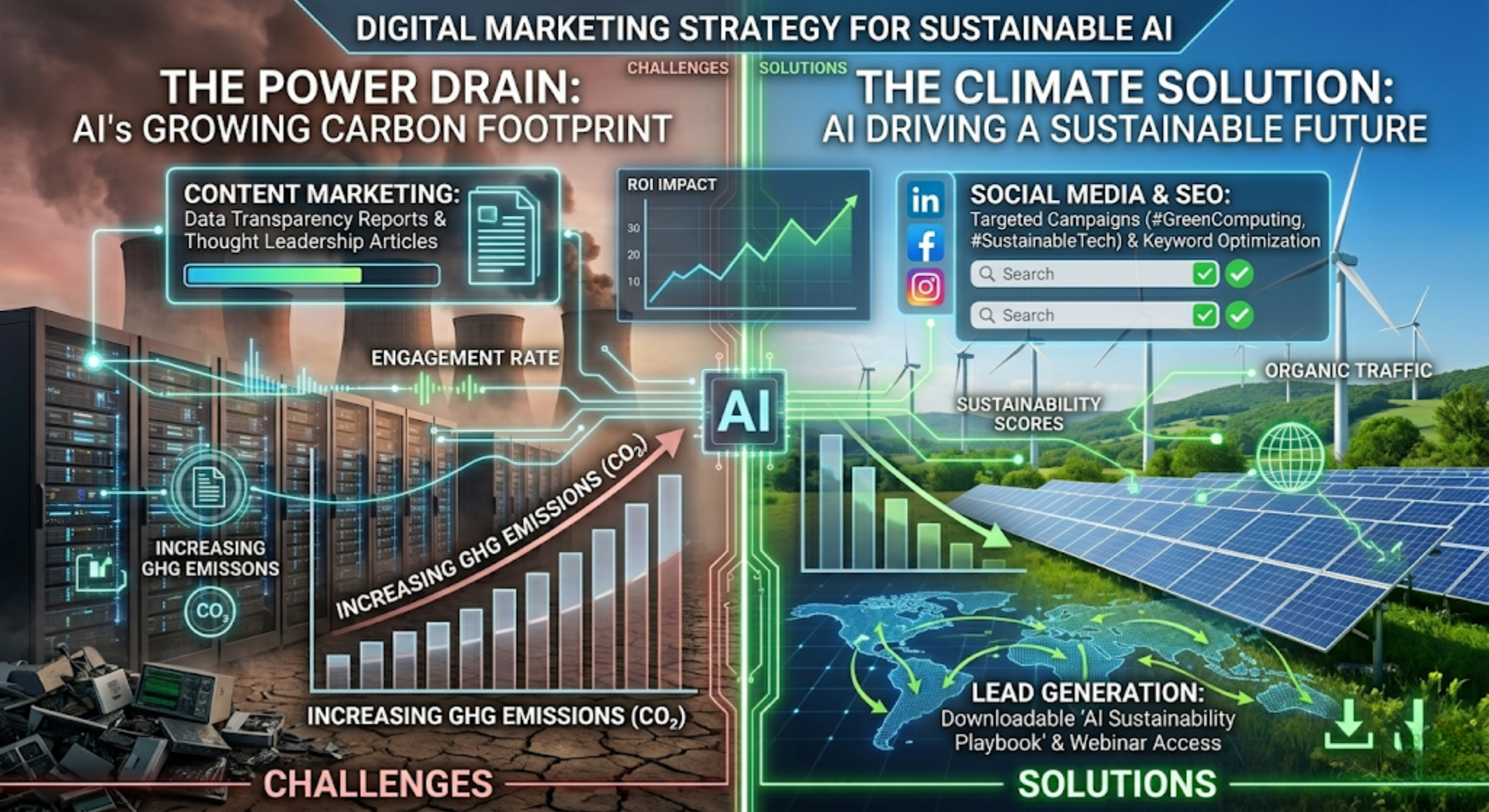
Artificial Intelligence is changing the world faster than almost any technology before it. From creating content and automating tasks to improving healthcare and helping businesses grow, AI is becoming part of everyday life. But as AI becomes more powerful, one question keeps coming up:
Is AI helping save the planet, or is it making environmental problems worse?
The answer is more complex than a simple yes or no. AI has the potential to support sustainability, reduce waste, and fight climate change. At the same time, AI systems consume massive amounts of energy and require huge computing resources.
Here is a closer look at both sides of the debate.
AI is helping companies optimize energy consumption. Smart systems can predict electricity demand, reduce waste, and improve renewable energy distribution.
For example:
This means less wasted energy and lower carbon emissions.
Scientists are using AI to analyze climate data faster than traditional methods. AI models can detect patterns, forecast extreme weather, and improve environmental research.
AI supports:
Better predictions can help governments and organizations take action earlier.
Manufacturing and logistics often create significant waste. AI improves supply chains and helps businesses operate more efficiently.
Examples include:
Efficiency often leads to lower environmental impact.
Farmers are using AI tools to improve crop production while reducing water, fertilizer, and pesticide usage.
AI-powered agriculture helps:
This could become increasingly important as the global population grows.
While AI offers many benefits, it also has a hidden environmental footprint.
Training advanced AI models requires enormous computing power. Data centers running AI systems consume huge amounts of electricity.
Some concerns include:
As AI adoption expands worldwide, energy requirements continue to rise.
Many AI data centers use water for cooling systems. Large-scale computing operations can require substantial water resources.
In regions already facing water shortages, this raises sustainability concerns.
Rapid advancements in AI increase demand for specialized hardware like GPUs and processors. Frequent upgrades can contribute to electronic waste.
Managing e-waste responsibly becomes critical as AI technology evolves.
The reality is that AI is neither inherently harmful nor inherently sustainable. Its impact depends on how humans build, power, and use it.
If AI development prioritizes:
Then AI could become a powerful tool in addressing environmental challenges.
However, without sustainable practices, AI could increase resource consumption and environmental pressure.
The future depends less on AI itself and more on the decisions businesses, governments, and technology companies make today.
Companies adopting AI should not only focus on productivity and growth but also consider sustainability.
Questions businesses should ask:
The organizations that combine technology with sustainability may lead the future.
AI is transforming industries, reshaping marketing, and changing how businesses operate. The challenge is ensuring innovation moves alongside environmental responsibility.
AI has the potential to become one of humanity’s strongest tools against climate change — but only if used wisely.
The conversation should not be “AI vs the planet.”
It should be “How can AI help build a more sustainable planet?”
As technology evolves, the responsibility remains with us.